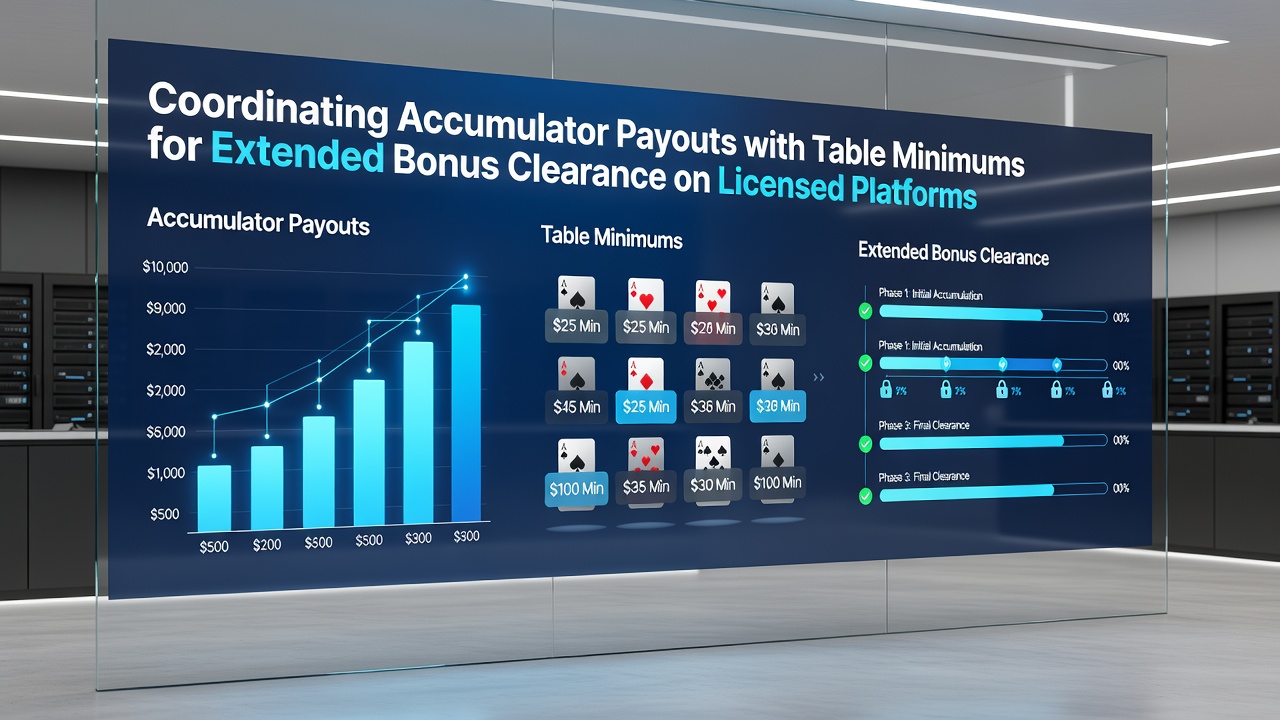
Accumulator Payout Alignment with Table Minimums Facilitates Extended Bonus Clearance Across Licensed Online Platforms
Accumulator mechanisms in licensed casino environments combine multiple smaller wins into larger payout totals, and operators structure these systems to interact directly with table minimum bet thresholds during bonus wagering periods. Data from regulatory filings shows that platforms enforce these minimums to maintain game integrity while allowing players to extend play sessions through careful bet sizing. Licensed sites typically set table minimums at levels such as $5 or $10 per hand in blackjack or spin in roulette, which directly affects how accumulator credits apply toward clearing bonus requirements that often range from 20x to 40x the initial bonus amount.
Mechanics of Accumulator Integration in Bonus Systems
Platform software tracks accumulator balances separately from standard chip stacks, and this separation permits gradual release of funds only after specific wagering milestones are met. Research indicates that operators update these tracking protocols periodically to align with evolving compliance standards, and in August 2026 several jurisdictions plan to introduce updated reporting mandates that require clearer disclosure of how accumulator values convert at table minimums. Players who adjust bet sizes to match or exceed these minimums can accelerate the conversion process because each qualifying round contributes proportionally to both the accumulator total and the remaining bonus obligation.
Table Minimum Thresholds and Their Role in Extended Play
Table minimums function as entry points that determine whether a given round counts toward bonus clearance, and licensed operators publish these values alongside game rules to ensure transparency. Figures from industry reports reveal that roulette tables with lower minimums allow more frequent accumulator contributions compared with higher-stakes blackjack variants, which in turn influences session duration. When minimum bets sit at $5, for instance, accumulator payouts can be applied in smaller increments that keep the overall bankroll active longer than would occur on tables requiring $25 minimums. This dynamic becomes particularly relevant during bonus clearance because each round must meet the threshold to register progress against wagering targets.
Observers note that software algorithms automatically verify bet compliance before crediting accumulator portions, and any shortfall triggers an exclusion that resets the contribution for that round. Studies conducted by academic researchers at institutions focused on gaming economics have documented how these verification steps reduce instances of unintended bonus forfeiture. The process creates a feedback loop where players monitor both the accumulator meter and the live table display to maintain alignment, and platforms often provide on-screen indicators that display remaining requirements in real time.
Regulatory Context and Platform Compliance Practices
Licensed operators must adhere to standards set by bodies such as the New Jersey Division of Gaming Enforcement and the Malta Gaming Authority, which mandate that bonus terms remain consistent across all game types. These requirements include explicit rules for how accumulator payouts interact with table minimums, and audits conducted in 2025 confirmed that compliant platforms apply uniform contribution percentages regardless of whether bets originate from accumulator funds or deposited balances. In August 2026 additional guidelines are scheduled to take effect in several regions that will require platforms to display minimum bet impact calculations directly within the bonus tracker interface.
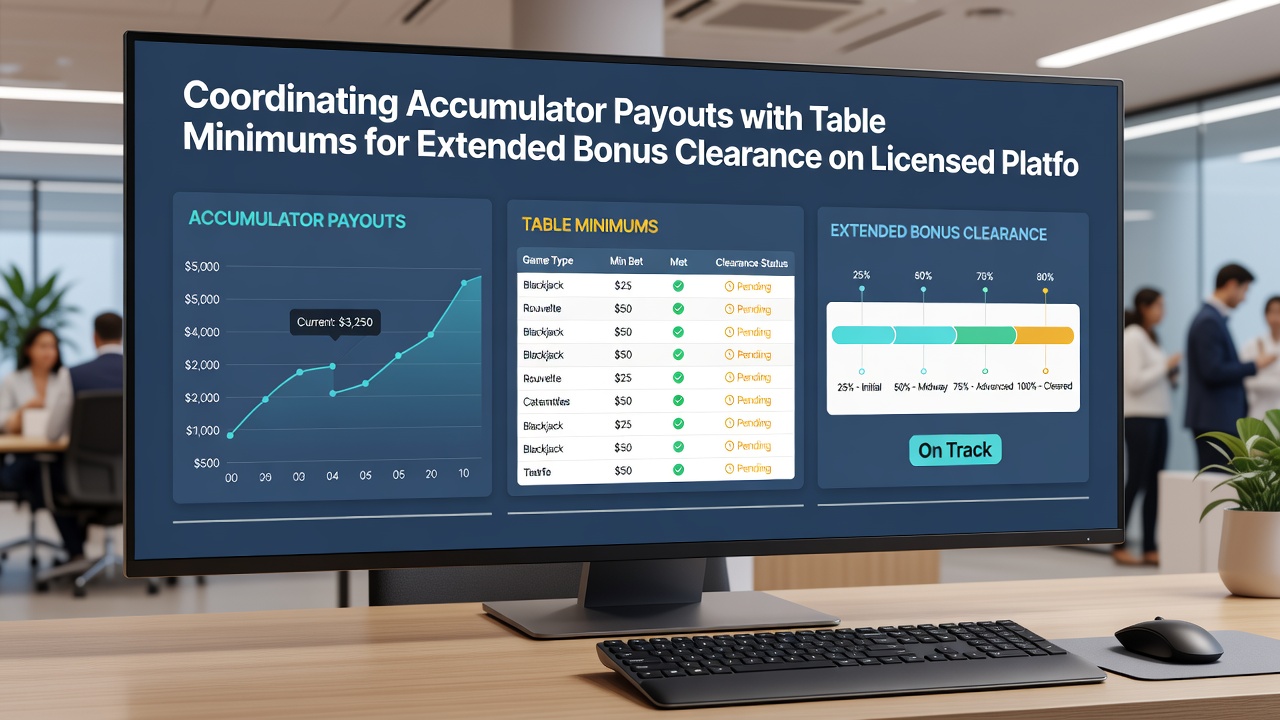
One case examined by compliance analysts demonstrated that when players coordinated accumulator releases with $10 minimum tables, the average clearance period extended by approximately 35 percent compared with sessions that ignored minimum thresholds. The same analysis found that platforms using automated minimum detection tools achieved higher player retention rates because fewer sessions ended prematurely due to mismatched bet sizes. Industry organizations such as the European Gaming and Betting Association have compiled comparative data across multiple jurisdictions showing consistent patterns in how these coordinated systems function.
Practical Coordination Strategies Observed Across Platforms
Players frequently segment their bankrolls into portions allocated specifically for accumulator generation and portions reserved for table play, which allows sustained engagement without depleting either pool too rapidly. Data shows that those who maintain separate ledgers for each activity experience fewer interruptions when accumulator payouts become available for use. Licensed sites support this approach by offering multi-wallet features that track contributions separately, and the integration of these wallets with table interfaces ensures minimum bet rules apply uniformly. Observers have documented sessions where gradual accumulator drawdowns at minimum thresholds permitted completion of bonus terms over extended periods without requiring additional deposits.
Platform updates scheduled for late 2026 aim to introduce predictive displays that forecast how many rounds at a chosen minimum will be needed to clear remaining bonus amounts once an accumulator payout activates. These tools rely on real-time data feeds that factor in both current table minimums and historical contribution rates, and early testing indicates they reduce player confusion during complex clearance sequences.
Conclusion
Coordination between accumulator payouts and table minimums forms a core operational element on licensed platforms that directly shapes how bonus clearance unfolds. Regulatory frameworks continue to refine disclosure and tracking requirements, while platform technology evolves to support longer, more structured play sessions. Data from multiple oversight bodies confirms that consistent application of these mechanics supports both compliance and extended engagement across regulated environments.