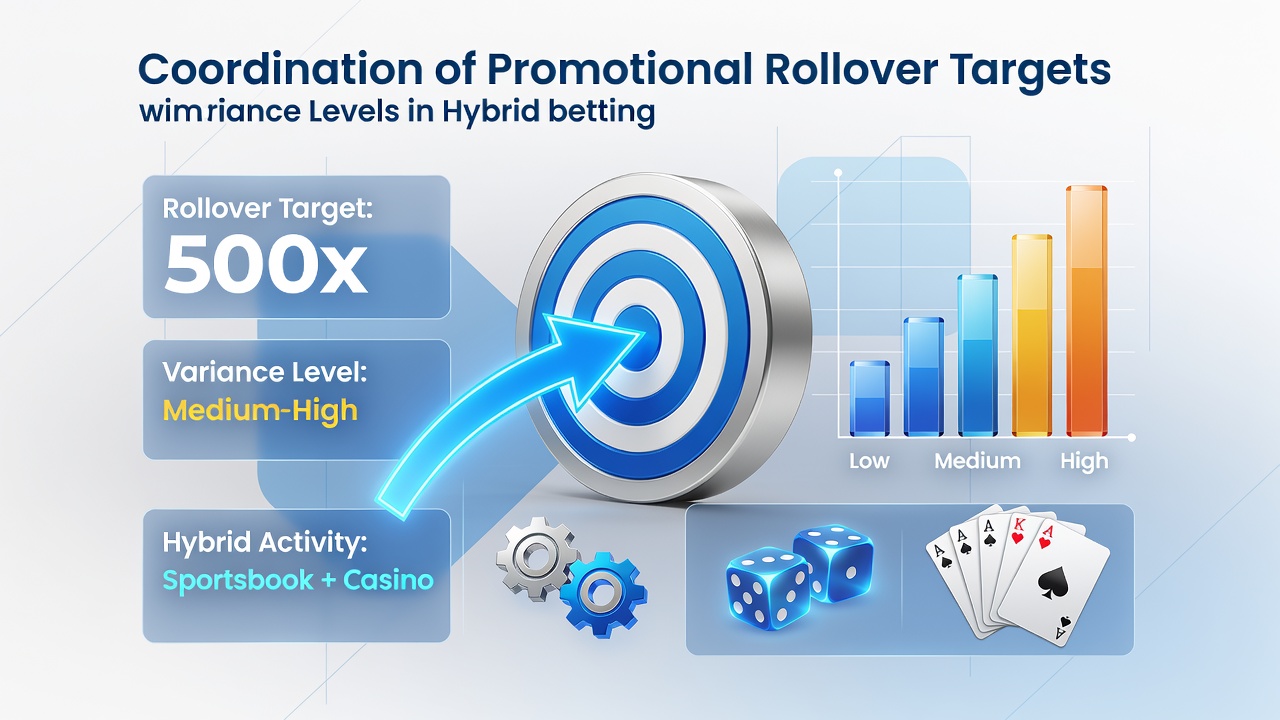
Harmonizing Rollover Targets and Variance Profiles Across Hybrid Betting Portfolios
Hybrid betting activities combine elements from sports wagers and casino games, which creates specific demands when operators set promotional rollover targets alongside game variance levels. Operators track these metrics to maintain compliance while participants manage play sequences across formats. Data from the Alcohol and Gaming Commission of Ontario shows that integrated platforms reported a 22 percent rise in hybrid session volumes during the first half of 2025, with rollover structures adjusted quarterly to match volatility patterns.
Rollover Structures in Multi-Format Promotions
Promotional rollover targets specify the total amount a participant must wager before bonus funds convert to withdrawable cash, and these targets often span both fixed-odds sports markets and random-outcome casino products. Operators calculate targets using historical hold percentages, then apply weighting factors that differ by game category. Studies conducted by the Australian Gambling Research Centre indicate that targets set between 20x and 35x on hybrid deposits produce completion rates near 48 percent when variance remains moderate across the portfolio.
Variance Measurement in Hybrid Environments
Variance quantifies the spread of outcomes in each betting format, with sports markets showing lower variance due to skill-influenced elements and slots displaying higher variance from random number generation. In hybrid sessions participants frequently shift between low-variance table games and high-variance progressive slots, which alters the overall risk curve. Research published by the University of Nevada, Las Vegas Center for Gaming Research found that portfolios mixing 60 percent low-variance sports bets with 40 percent medium-variance blackjack reduce session-ending bankroll depletion by 31 percent compared with slot-dominant mixes.
Coordination Techniques Used by Operators
Operators align rollover targets with variance by segmenting eligible games into tiers and applying different contribution percentages to each tier. A game contributing 100 percent toward rollover might carry a lower variance rating, while a 20 percent contribution game receives a higher variance classification. This tiered system appears in platform documentation across multiple jurisdictions. In August 2026 the Alcohol and Gaming Commission of Ontario will require operators to publish variance-adjusted rollover calculators for all hybrid promotions, a change expected to standardize disclosure practices.
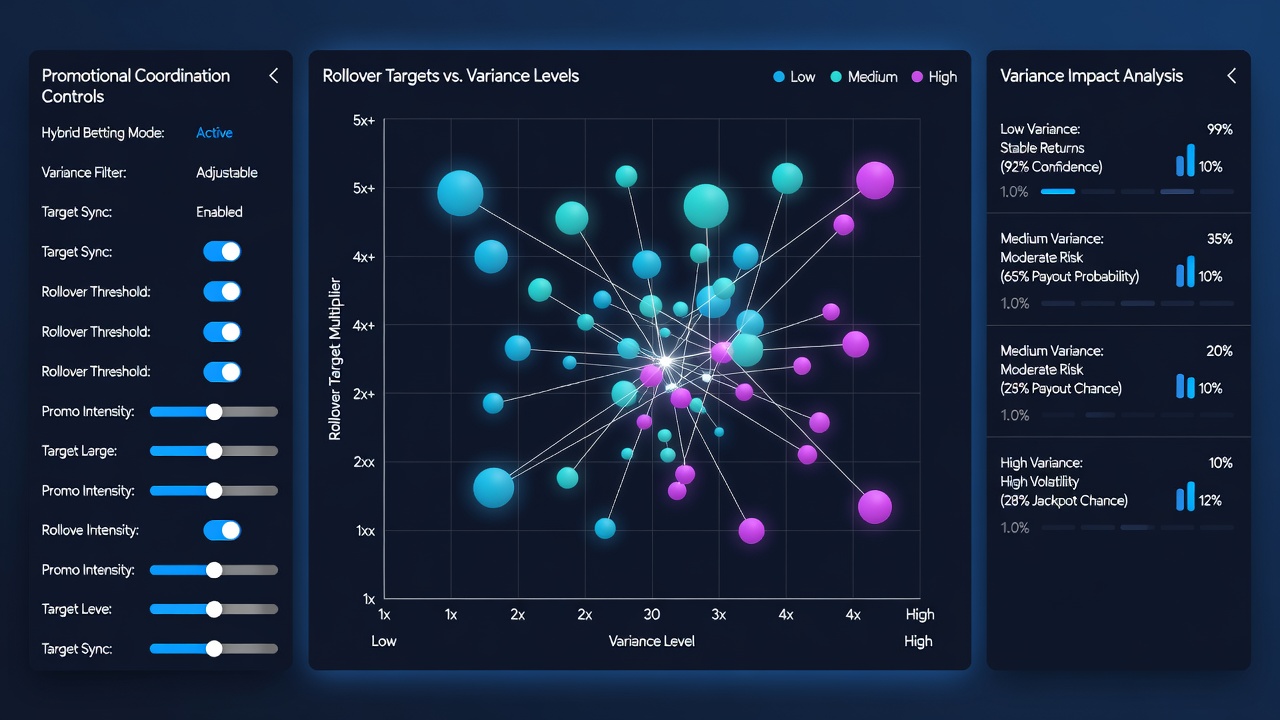
Participants who review these calculators before starting a session can map expected standard deviation against remaining rollover progress. One documented case from a Canadian operator showed that users who selected variance-matched game sequences completed rollovers 19 percent more often than those who selected games at random. Platform analytics further reveal that sessions lasting under 45 minutes benefit from lower-variance selections, whereas extended sessions tolerate higher variance when rollover percentages are front-loaded.
Data Patterns Across Jurisdictions
Figures released by the Netherlands Gambling Authority in its 2025 annual report list hybrid products as the fastest-growing category, with average rollover targets rising from 25x to 28x over two years. The same report notes that variance-weighted contribution rules reduced dispute volumes by 14 percent. Observers note similar adjustments in Australian state licensing data, where operators must submit variance impact statements alongside any promotional filing that spans multiple game types.
Practical Application Examples
Consider a participant who receives a deposit bonus tied to a 30x rollover across sports and slots. Selecting low-variance football accumulator bets for the first 40 percent of the requirement, then moving to medium-variance video poker for the balance, produces a smoother equity curve according to simulation models from the Canadian Centre for Gaming Research. Conversely, beginning with high-variance slots increases the chance of early depletion before the rollover threshold is reached. Operators supply session-tracking tools that flag variance drift in real time, allowing participants to adjust selections mid-session without resetting progress.
Conclusion
Coordination of promotional rollover targets with variance levels in hybrid betting activities relies on tiered contribution rules, published calculators, and ongoing regulatory updates. Data from multiple licensing bodies demonstrates measurable effects on completion rates and dispute volumes when these elements receive systematic alignment. Participants who apply variance-aware sequencing maintain longer engagement periods while operators satisfy compliance requirements across evolving platform formats.