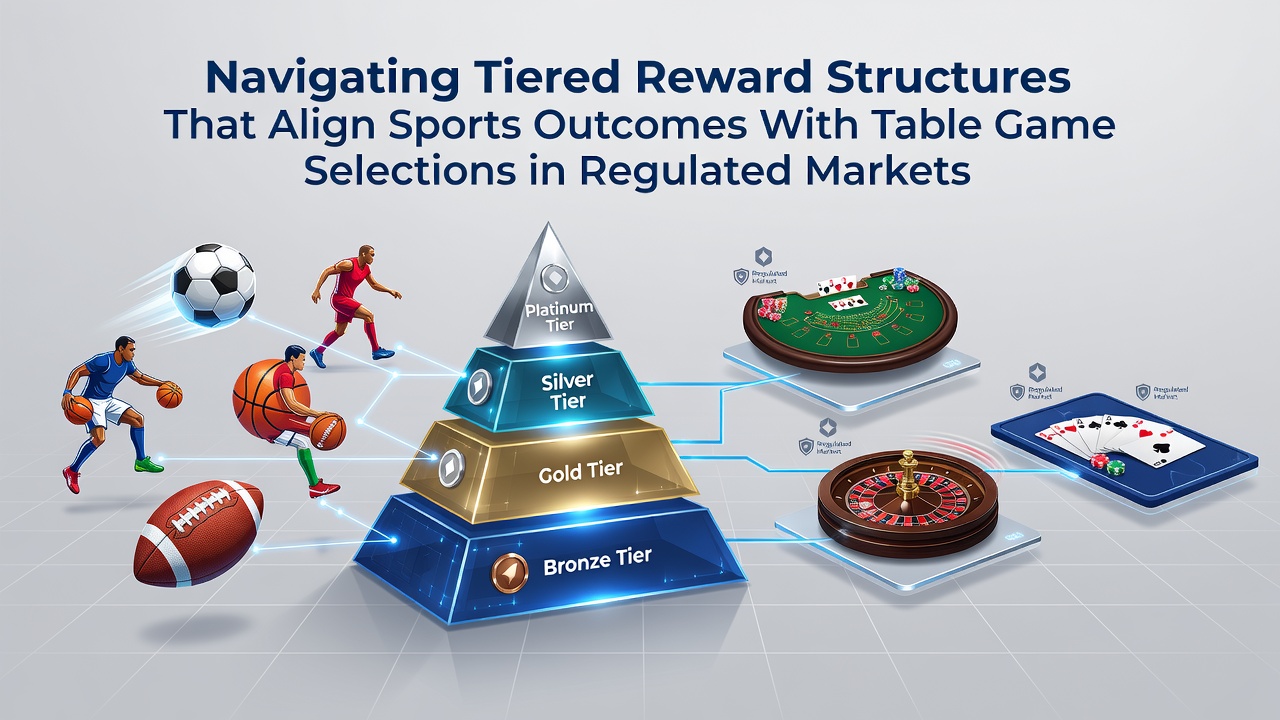
Integrating Performance-Based Incentives Across Sports and Table Games in Licensed Markets
Regulated markets continue to develop tiered reward programs that link outcomes from sports betting directly to selections made at table games, creating structured pathways where player activity in one area influences benefits available in another. These systems operate under oversight from bodies such as the Nevada Gaming Control Board and the Australian Communications and Media Authority, which require operators to maintain clear documentation of how rewards accrue and transfer between verticals.
Core Mechanics of Tiered Structures
Operators establish multiple levels within loyalty frameworks, where progression depends on combined metrics that include wager volume from sports events and time spent or amounts risked on table games such as blackjack and roulette. Data from regulatory filings shows that reaching higher tiers often unlocks enhanced multipliers on table game comps once specific sports outcome thresholds are met, such as successful parlay completions or consistent win rates over defined periods. Those who study these programs note that the alignment encourages cross-category participation without violating jurisdictional limits on bonus structures.
Eligibility rules typically specify that sports results must meet minimum criteria before they convert into table game credits or priority access, while table game activity in turn can accelerate tier advancement that retroactively boosts sports-related rewards. Licensed platforms implement automated tracking systems to log these interactions in real time, ensuring compliance with reporting standards that vary by jurisdiction yet share the common requirement of transparency for players.
Regulatory Frameworks Shaping Alignment
Across multiple regions, licensing conditions mandate that reward tiers remain proportional to actual play and do not create inducements outside approved parameters. A report issued by the New Jersey Division of Gaming Enforcement details how operators must submit detailed schematics of any cross-vertical reward mechanics prior to deployment, with particular attention given to how sports outcomes translate into table game incentives. Similar requirements appear in Canadian provincial frameworks, where authorities review alignment formulas to confirm they align with consumer protection guidelines.
July 2026 marks the scheduled implementation date for updated reporting protocols in several Australian states that will require quarterly disclosures on the distribution of rewards generated through sports-to-table linkages. These updates build on existing standards and aim to provide regulators with granular data on player migration between product categories. Operators have already begun adjusting their internal systems to capture the necessary metrics ahead of the deadline.
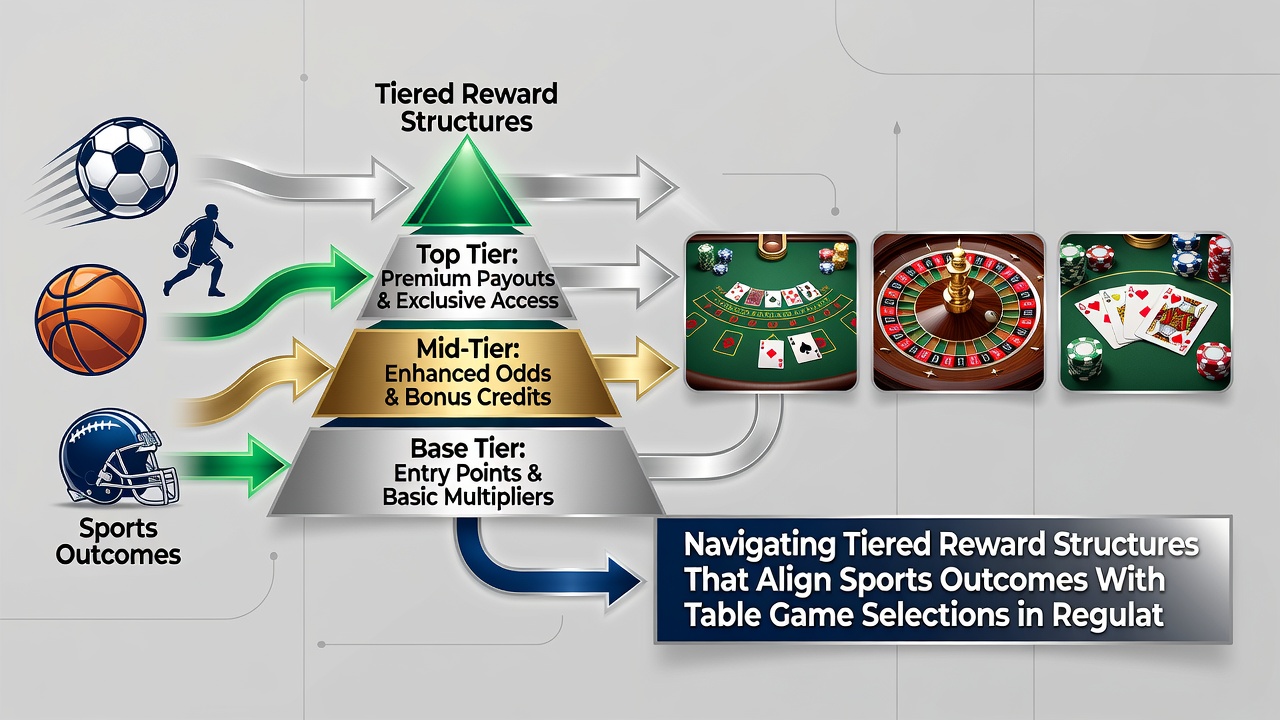
Player Navigation Strategies Observed in Practice
Participants who monitor their progress across both verticals often select table games that carry lower house edges during periods when sports outcomes have already secured a temporary tier boost, thereby maximizing the value extracted from the aligned rewards. Industry analyses from the University of Nevada, Las Vegas International Gaming Institute indicate that structured movement between categories can extend session lengths when players allocate portions of sports winnings to table game play that qualifies for additional comps.
Case examples documented in regulatory submissions reveal patterns where players achieve tier upgrades after a series of favorable sports results, then apply the resulting benefits to table games with higher minimum bets that would otherwise remain inaccessible. These transitions remain subject to daily and weekly caps established by operators to satisfy jurisdictional rules on reward velocity.
Data Trends Across Jurisdictions
Figures released by the European Gaming and Betting Association show steady growth in the proportion of rewards claimed through cross-category mechanisms in markets where such alignments are permitted. The data indicates that table game selections following positive sports outcomes account for measurable portions of overall gaming volume in several European Union member states with mature regulatory environments. Researchers tracking these trends emphasize the importance of transparent disclosure so that participants understand the conditions attached to each tier.
Platforms operating in multiple jurisdictions maintain separate rule sets for each market, ensuring that reward calculations respect local restrictions while still allowing sports results to influence table game options where permitted. Compliance teams routinely audit these calculations against source data from both sports and table game feeds to prevent discrepancies that could trigger regulatory review.
Conclusion
Tiered reward structures that connect sports outcomes with table game selections continue to evolve within the boundaries set by licensing authorities worldwide. Observers note that successful navigation depends on understanding the specific conversion rules, caps, and eligibility windows that apply in each regulated environment. As additional reporting requirements take effect in 2026, operators and participants alike will rely on precise tracking to maintain compliance and realize teh intended benefits of these aligned systems.