
Precision Allocation Methods: Balancing Resources Between Reel Spins, Card Tables, and Event Wagers in Licensed Platforms
Precision allocation methods help players distribute bankrolls across reel spins, card tables, and event wagers on licensed platforms, where operators track activity through integrated systems that log every transaction. These approaches rely on predefined ratios that adjust for game volatility and payout structures rather than random decisions, while data from regulatory filings shows consistent patterns in how funds move between categories during extended sessions.
Operators in multiple jurisdictions maintain records that separate slot activity from table play and sports betting, which allows for clearer tracking of session lengths and return rates. Research from the University of Nevada Reno Gaming Research Center indicates that players who segment their funds by game type often maintain play longer before reaching predefined stop-loss points, particularly when they factor in the house edge differences between mechanical reels and live dealer tables.
Core Components of Allocation Frameworks
Allocation begins with an assessment of each category's risk profile, where reel spins typically receive portions based on hit frequency data published in game rules, card tables draw from historical variance reports, and event wagers follow odds movement tracked by licensed sportsbooks. Observers note that July 2026 updates in several European licensing regimes introduced mandatory reporting intervals for cross-category transfers, requiring platforms to flag any shift exceeding 15 percent of a player's total balance within a single day.
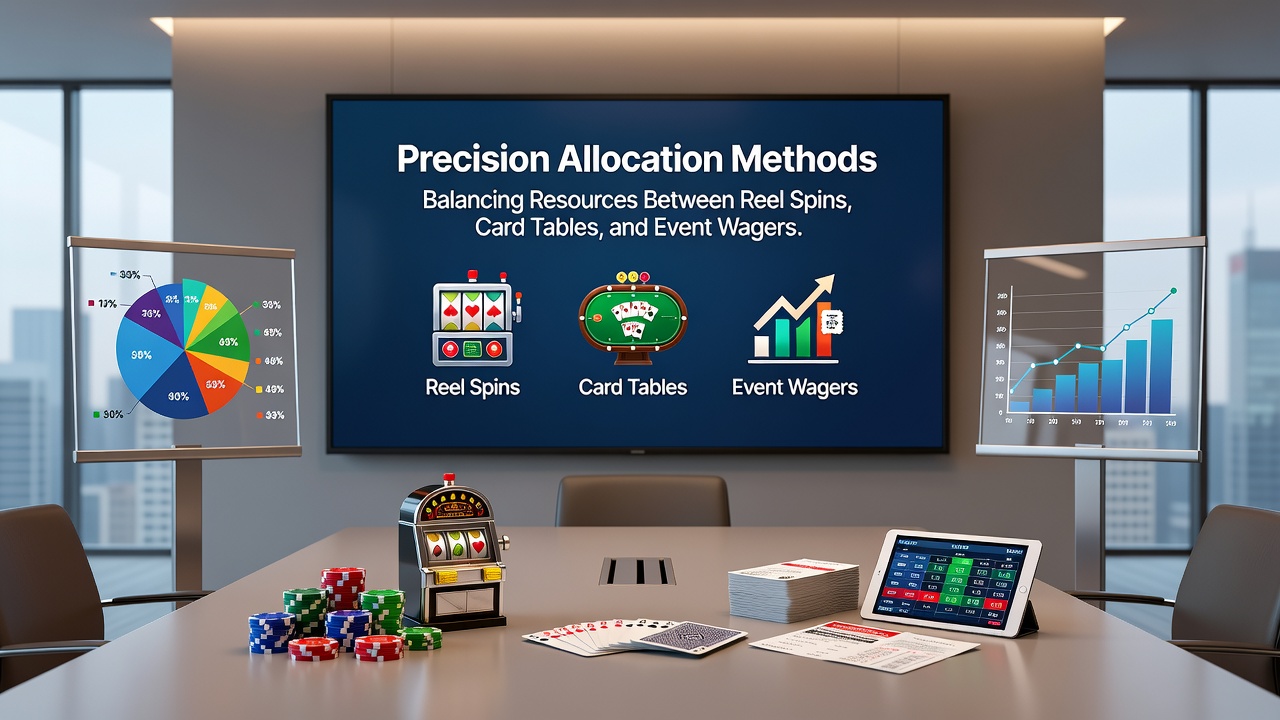
Those who apply fixed-percentage models assign 40 to 50 percent to slots for steady volume play, 25 to 35 percent to tables for skill-influenced outcomes, and the remainder to event wagers that carry time-sensitive lines. This structure draws from industry reports compiled by the Nevada Gaming Control Board, which document how such splits correlate with reduced early-session depletion in monitored accounts.
Adjusting for Platform-Specific Rules
Licensed environments enforce wagering requirements that differ by product, so allocation methods incorporate these thresholds when moving funds between reel spins and card tables. A player might reserve a larger share for tables if the platform offers lower rollover multipliers on blackjack compared with slot contributions, while event wagers often carry separate contribution rates listed in the terms.
Software tools provided by operators allow real-time rebalancing, and figures from the Australian Communications and Media Authority reveal that users who activate automated alerts for category limits tend to stay within their initial plans more often. The process connects directly to responsible gambling features that pause transfers once a preset ceiling is reached.
Practical Examples from Regulated Markets
Take one analysis of Canadian provincial data where participants divided resources into three buckets before entering mixed gaming sessions, resulting in documented extensions of average play duration by 18 percent according to internal operator summaries. Similar patterns appear in reports from the New Jersey Division of Gaming Enforcement, where combined slot and table allocations showed steadier drawdown curves when event wagers remained under 20 percent of the total.
Platforms integrate these methods through dashboard interfaces that display live percentages, and users receive prompts when one category approaches its assigned limit. This setup reduces the likelihood of unplanned shifts that could trigger bonus forfeiture clauses common across licensed sites.
Monitoring and Refinement Techniques
Regular review cycles help maintain balance, with many systems logging weekly summaries that break down returns by category. Data from the European Gaming and Betting Association highlights how players who compare these summaries against initial targets adjust future allocations to favor categories with stronger observed performance during specific time windows.
Event wagers introduce additional variables tied to fixture schedules, so allocation models often reserve flexible portions that can move into reels or tables if lines close early. Licensed operators flag such movements in compliance logs, ensuring transparency without interrupting the session flow.
Conclusion
Precision allocation methods provide structured ways to manage resources across reel spins, card tables, and event wagers within the constraints of licensed platforms, where reporting requirements continue to evolve. The approaches rely on documented ratios, regulatory thresholds, and platform tools that together support extended and measured participation.